The latest Bishop’s teaching morning was focussed on setting out a prophetic challenge to climate and economic injustice.
As the urgency and extremity of climate change and environmental destruction increase, and as these impact disproportionately on the poorest and most vulnerable, clergy and Readers gathered in Worcester to explore how churches can respond to this.
The day was led by David Hewlett, Chair of the diocesan climate crisis task group. Those present were welcomed by Bishop Hugh who talked about his own journey and commitment to climate justice. He said: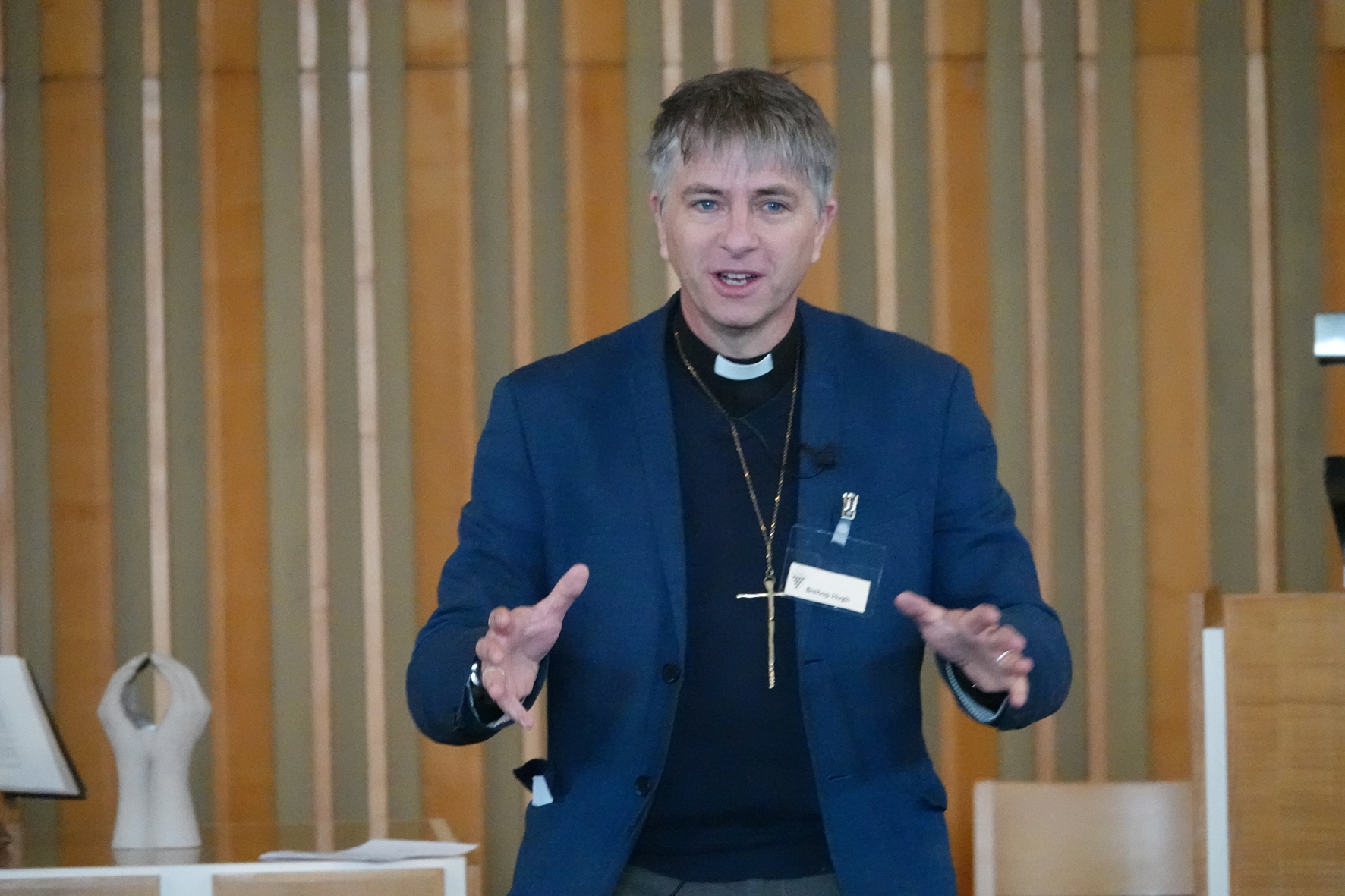
“In my head I knew the climate crisis was real, but it wasn’t until I visited an Extinction Rebellion event that the Spirit moved and I realised that to cherish creation should be at the heart of what it means to be a disciple. I’m really pleased that that climate justice is the topic of my first teaching morning as Bishop of Worcester and hope that we will all leave here a bit more committed to it in our hearts.”
The morning sessions involved three speakers talking about our prophetic challenge to the extractive economy.
Theology
 The Revd Dr Peniel Rajkumar is Director of Global Mission and Theologian at USPG and an Honorary Canon of Worcester Cathedral. He talked about the importance of having humility, hope and hostility and the importance of moving beyond the theologies of stewardship and sustainability, which reduce nature to the object of human management. He said:
“Hearing the cries of the planet needs to go hand in hand with hearing the cries of the poor, and transformation can only start with genuine repentance. We can’t continue to consume at exponential rates but should be questioning and disrupting the very things on which our world is based. We need truly transformational discipleship and must learn to be guests at the tables of other peoples’ projects, particularly those on the margins of society. God’s power to transform the world is found in places where we least expect it.”
Economic Justice
 Sarah Edwards is the Executive Director of JustMoney Movement and spoke on the importance of economic justice. Sarah unpicked what we mean by an extractive economy, which is about taking something out without any plans to put it back; and highlighted the systemic extractionism in our society. Many organisations work in an extractive manner and many of these extractive practices are only possible because of our banks. There are also companies which use tax havens to avoid paying their fair share of tax.
Sarah also highlighted our Christian teaching and heritage as a way to highlight these inequalities. She said: “There is much in our Christian tradition which can help us to reimagine our economic life. The bible tells us that everything belongs to God. We are only stewards and should be accountable for all we are doing in the world around us. In Jesus’ teaching there are numerous occasions where he rebukes the wealthy and is one in a long line of prophets who focussed attention on the injustices in society. There are ways of doing business which seek human flourishing and we should be campaigning for change. By working together as a movement, we can bring about global transformative change and seek a greener, fairer future together.”
Climate Justice
 Robin Parry, Minor Canon at Worcester Cathedral spoke about Eco Spirituality, reminding us that climate change affects everyone, but not equally. Those who bear the heaviest burdens are the poorest nations, while those whose energy-demanding lifestyles have created the climate crisis are the rich nations.
Robin said: “The world is profoundly interconnected and we’re all participants in structural sin when it comes to climate crisis. It is not all our fault, but we are part of the problem and do have some culpability. Three things should matter to Christians: People - climate change threatens human flourishing; all creatures – climate change is having devastating consequences on plant life and non-human animals; and justice, which is a core part of our faith. Rich countries must significantly reduce their carbon emissions, and we all need to adapt to deal with climate change, ensuing that adaptation prioritises vulnerable communities.”
Learning from each other
 Those present gathered in small groups to think about what biblical and theological frameworks they had found helpful when thinking about climate justice and what they felt the barriers were for churches to engage in this topic, as well as highlighting some good ideas of things to share with others.
After a shared lunch together, there were workshops available for people to continue the discussion. These were focussed on practical support for Eco Church, how to be greener in our finances (led by the Just Money Movement), the importance of global solidarity (led by USPG) and the options available when replacing your church boiler.