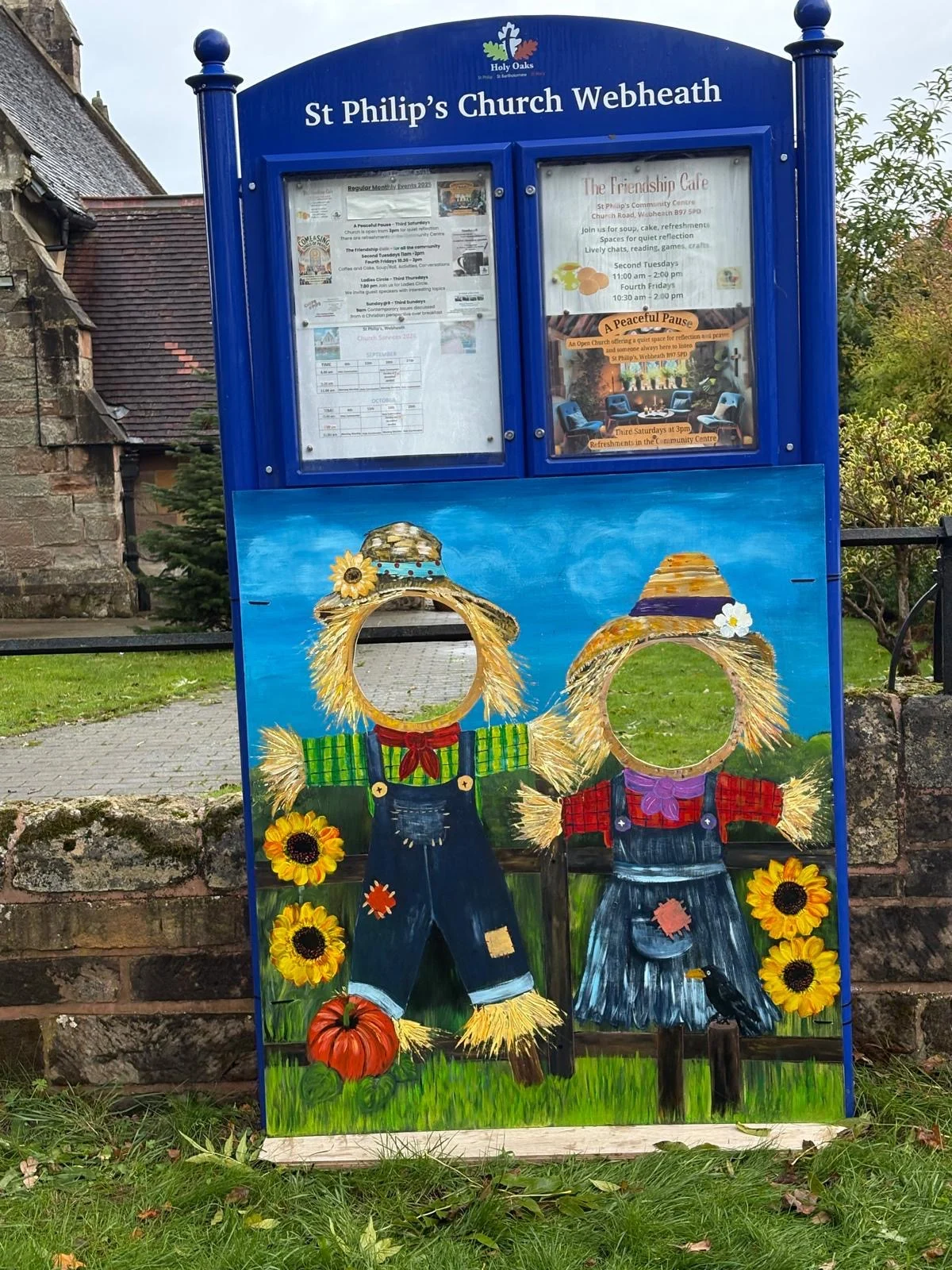
Selfie scarecrows at Webheath church
St Philip's Church in Webheath is taking part in a local Scarecrow Trail, which runs from Saturday 24 to Tuesday 27 October.
A sermon podcast for Trinity 19 on 11 October 2026
What are you wearing? Our attire says a lot about who we are.
In today’s Gospel, clothing plays an important role. The reading begins with Jesus comparing the kingdom of God to a wedding banquet. A king prepares a magnificent feast to celebrate the marriage of his son. Invitations are sent out, but when the time comes, the guests refuse to attend, making a series of feeble excuses.
This parable probably reflects the experience of the early Church in the turbulent first century. God’s chosen people, Israel, had refused the |Lord’s summons embodied in Jesus. Forty years later, when Jerusalem was destroyed by the Roman army, many interpreted that catastrophe as the consequence of this rejection. The event is echoed in the king’s angry response to those who snub his invitation. He sends his troops to destroy them and burn their city.
I find it amusing that the king has time to raise an army, fight a war, destroy a city, and yet the dinner is still warm on the table when he returns.
Now, however, the invitation is extended to outsiders. Greeks, Romans, and foreigners are welcomed into the kingdom, for the banquet hall must be filled. God’s kingdom is no longer the privilege of a few; the invitation is open to all.
For many, that story must have sounded very satisfying. You can imagine those early Christians complacently nodding their heads. How true. We, the former outsiders, are now God’s chosen people.
But there is a sting in the tail. If you compare this passage with the version of the story in Luke, or with the Gospel of Thomas, you will see that Matthew has added an appendix. Perhaps he is challenging just such smug self-satisfaction.
The king notices one diner who is not wearing a wedding robe. In disgust, this poorly dressed guest is thrown out into the outer darkness. Here Matthew employs one of his favourite expressions: a place of “weeping and gnashing of teeth”. Luke write that phrase only once, but Matthew uses it no less than five times.
It all seems a bit harsh for failing to wear a tie at a formal dinner.
But, of course, clothing is symbolic.
The Apostle Paul often deals with divided congregations, as when he urges Euodia and Syntyche to stop quarrelling. To describe the new life expected of Christians, he uses the same imagery:
“As many of you as were baptised into Christ have clothed yourselves with Christ.”
That ancient tradition is still reflected in our baptism liturgy, where the candidate is clothed in a white robe and these words are proclaimed:
“You have been clothed with Christ.”
There is no entrance fee to God’s kingdom. No one earns a seat at the messianic banquet. Christ, present in the bread and wine of the Eucharist, is freely offered to all.
But the warning against complacency is clear.
Baptism is not simply about accepting an invitation. It is about putting on Christ and being transformed into a new way of life.
If we accept the Lord’s invitation, we must put off the old clothes of hatred, division, gossip, and selfishness.
Instead, when we put on Christ, we are called to wear the garments of love, joy, peace, and kindness.
Amen.
1. What does it mean in practical terms to be “clothed with Christ” in our daily lives?
2. Why do you think Matthew added the story of the guest without a wedding robe?
3. What are the “old clothes” we are called to remove, and what are the “new clothes” we are called to put on?
St Philip's Church in Webheath is taking part in a local Scarecrow Trail, which runs from Saturday 24 to Tuesday 27 October.
A sermon podcast for Bible Sunday on 25 October 2026 from the Revd Doug Chaplin.

October is Black History month. This is being marked by two of our churches in completely different ways. Read about what Bewdley and Kidderminster East have been doing.
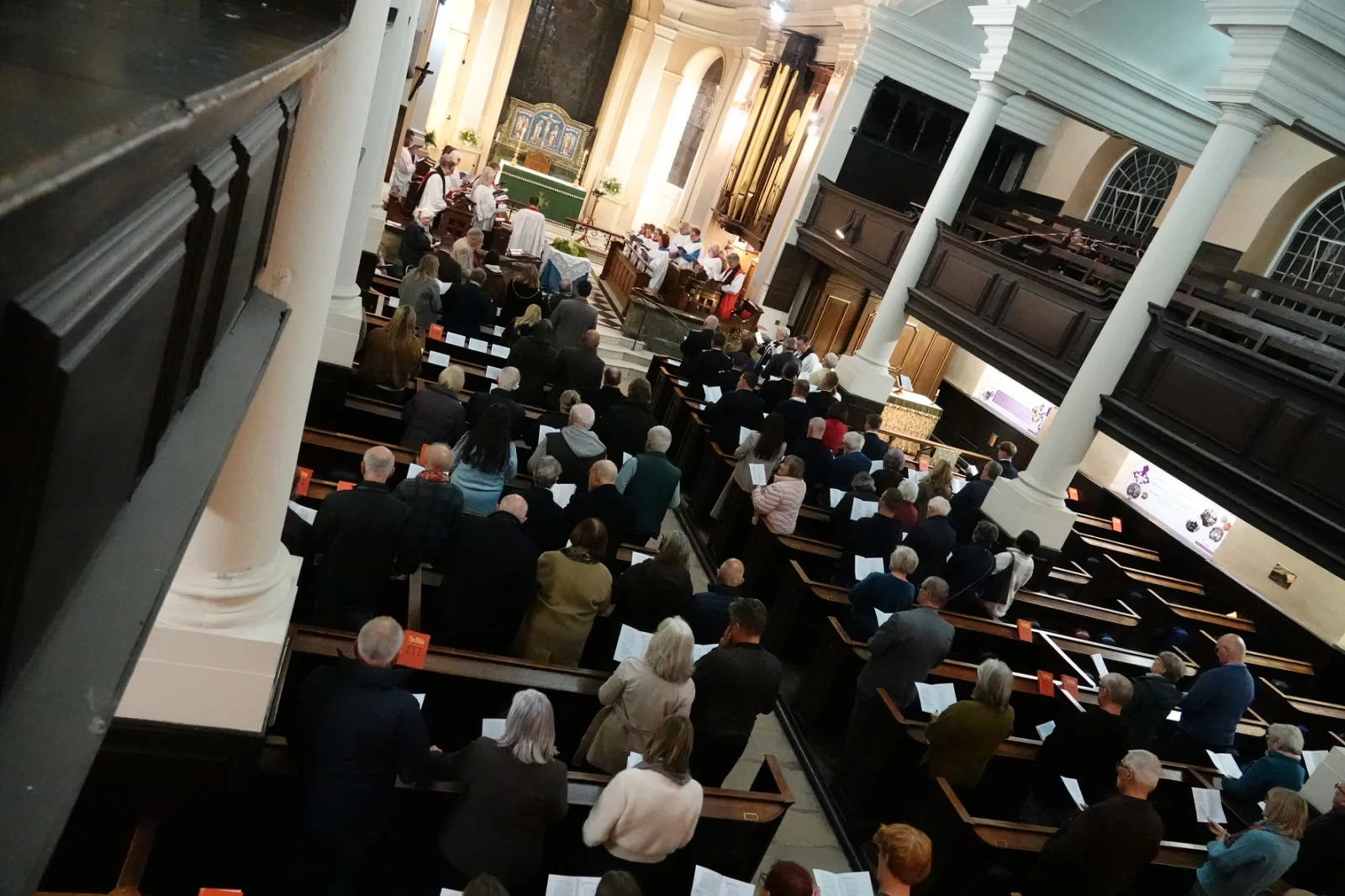
The community of Stourbridge gathered at St Thomas’ Church for a service of reflection and thanksgiving following the Stourbridge wildfires.…
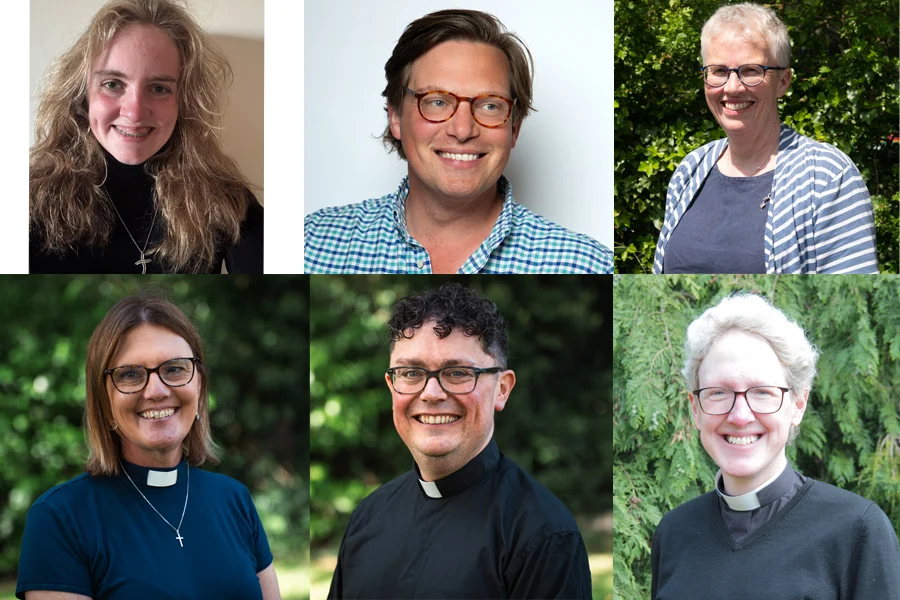
Following the electronic count on 14 October, six people have been elected to stand for General Synod from across the…
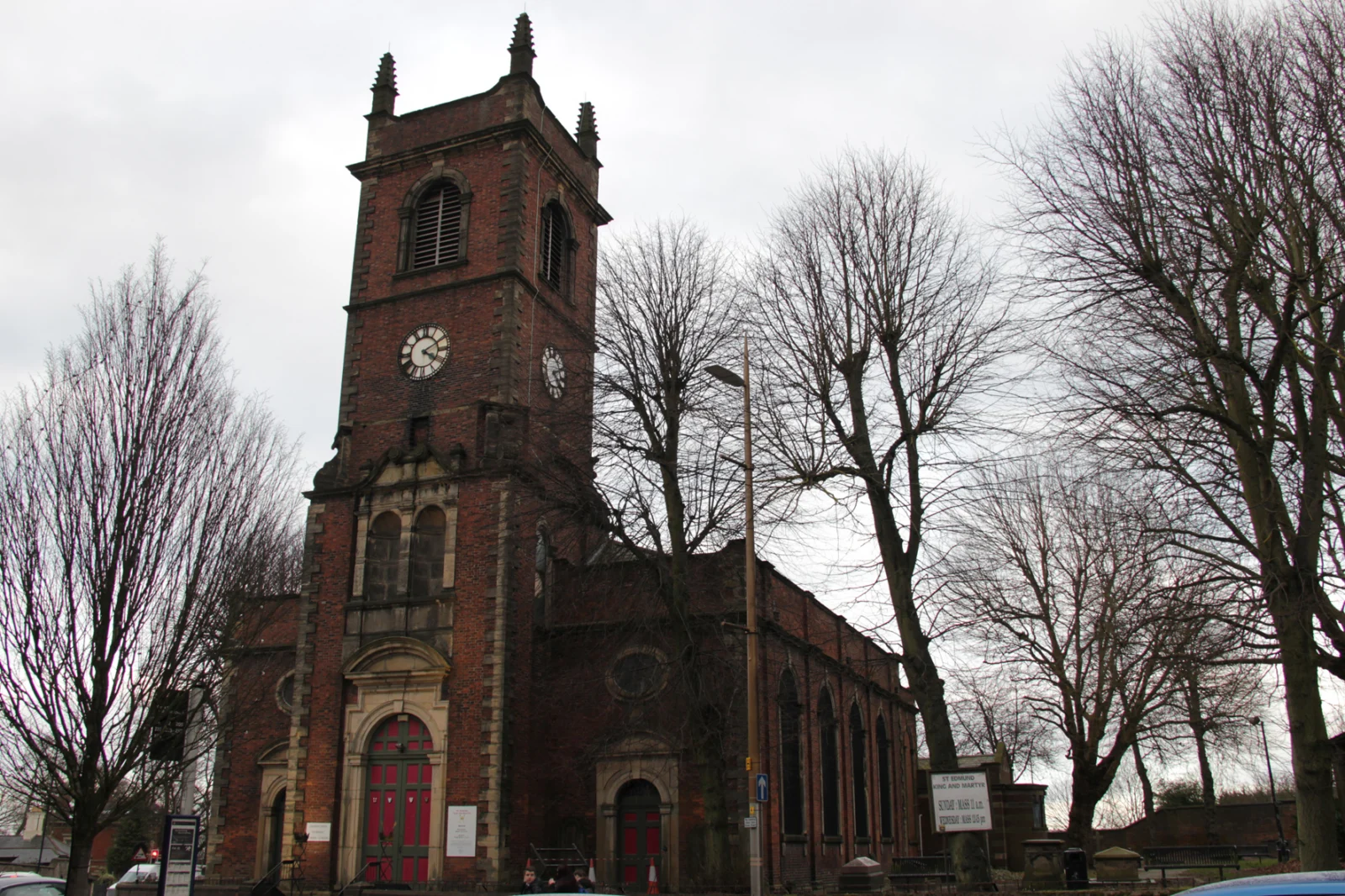
St Edmund’s Church in Dudley (also known as Bottom Church) has been awarded £587,320 in the first round of the…
Bishop Hugh has announced the appointment of the Revd Jason Clarke MBE as Priest in Charge (Team Rector designate) of…
Readings: 2 Timothy 4.5-17 Luke 10.1-9 Sermon: If you spend any time with Luke’s Gospel, you start to notice something:…
Following the positive impact of the previous funding made available under the Minor Repairs and Improvements Grant Fund and the Net…
Stir Up Church is a New Worshipping Community which takes place at St Mary’s Church in Hanley Castle on the…