Summary of the Day Around 70 people, including the Bishop of Worcester, DeputyLord Lieutenant Patricia Bradbury, and the High Sheriffs of Herefordshire (NatHone) and Worcestershire (Cassian Roberts) met together on…
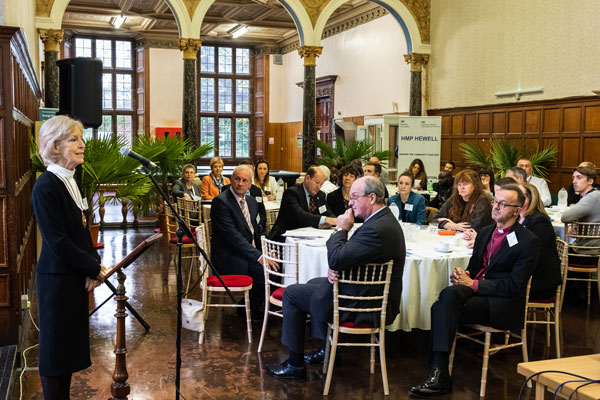
Around 70 people, including the Bishop of Worcester, DeputyLord Lieutenant Patricia Bradbury, and the High Sheriffs of Herefordshire (NatHone) and Worcestershire (Cassian Roberts) met together on Tuesday 16thOctober to reflect on the situation of prisoners serving indeterminate sentencesof Imprisonment for Public Protection (IPP).
These sentences were introduced in 2003, intended only for avery small group of highly dangerous prisoners, but they were used quite widelyfor prisoners who might, for example, only receive a two-year sentence.Although the misuse, and manifest injustice of this sentence, led to its beingabolished in 2012, there is still a large number of prisoners who are, forexample, still in prison years after other people, sentenced with a non-IPPtariff for the same crime, have been released.
The conference was held at HMP Hewell, at the invitation ofthe Governor, organised by the diocesan Criminal Justice Affairs Group, andchaired by the Bishops CJ advisor, Paul West. Those attending were a mix ofadvocacy groups, including family members of IPP prisoners, professionalsworking in the criminal justice system, and representatives of church andcommunity.
The day began with a video the group had recorded,interviewing four prisoners who were all serving IPP sentences, talking verymovingly about their experience.
Later in the morning,the conference heard from a range of top professionals in the field, ProfessorJackie Hodgson of Warwick University, Faith Geary, a Director of the ParoleBoard, and Sarah Chand, Midlands Divisional Director of the National Probationservice.
The morning ended with input from Mark Day and Ryan Harman,from the Prison Reform Trust, accompanied by Marc, a former IPP prisoner, nowworking with them, bringing the conference back to the stories of the peoplewho were still in prison years after having served the normal sentence fortheir crime.
In the afternoon there was a range of different workshops:Building a Rehabilitative Culture (led by Dr Jamie Bennett, Governor of HMPGrendon), IPPs the Legal Dilemmas (led by two members of the CJAG, His HonourToby Hooper QC and Mark Lister, a Worcester solicitor), A Probation OfficersPerspective (led by Steve Hewitt and Marianna Partridge from the NPS), and Impactson Family Relationships (led by Tina Pritchard of the Prison Advice and CareTrust, with input from family members).
At the end of the day, after a plenary session hearing backfrom the workshops, Robert Jones, the Archdeacon of Worcester, was asked tooffer a reflection on the event, as all those present considered how they couldtake forward the task of reducing the number of IPP prisoners in the system tozero.
The Archdeacon’s Reflections
The gathering
I am impressed thatthe diocesan group could bring together practitioners and concerned people fromsuch a wide range of experience and expertise. Particularly impressive was theinclusion of IPP prisoners, both as delegates and in the moving and powerfulvideo presentation at the start. This put the people concerned at the forefrontof the whole day. There was an enormous contribution by our hosts, the prison,who offered the venue and the hospitality.
Mind the gap.
I noticed a whole load of gaps, the main oneof which is between the flawed legislation, flawed enough to be taken off thestatute books, and the aftermath of that legislation, which is still with us,not least in the many IPP prisoners, serving sentences long beyond theirtariff. But others too:
Betweeninjustice recognised by all, but requiring legislation to correct it beyond ourcapability. We see the injustice: others need to legislate.
Betweenthe systems and the people. The Parole Board has really improved its processesand transparency. The Probation Service is reforming its way of working. Butthe prisoners experience in the stories do not reflect that.
Betweenresources and reality. Probation officers talked of the need for housing. Manypractitioners spoke of mental health needs. Marc, recently released, spoke ofthe importance of relationship with his probation officer, who could get toknow him, rather than having a whole series of different ones.
Betweenwhere we are and where we want to be.
Filling the gap
I was impressed by thecommitment of all to the urgency of changing this, and the understanding thatit is primarily people who are paying the price of the gap above all prisoners and their families, butalso sometimes victims through their uncertainties and professionals working inthis field. A word I heard often was hope, and what that might look like inreality. This occasion to network and discussion of enabling an environment ofhope meant there was a real buzz and a real engagement throughout the day.
Keep it personal
The day began with thestories from prisoners, captured on video. Other stories emerged throughout theday, and they are powerful. One key-note speaker included James and Charlotteby name in her presentation important to remember we are dealing with peoplewho are known by name. Another from the National Probation Service reminded usthat IPPs are members of our community. Mark told his own story, working now forthe Prison Reform trust; he even used the word torture to describe theindeterminate hole in which prisoners like him found themselves.
Its about people
So I quote from theletter to the Hebrews in the Christian Scriptures: remember those who are inprison, as though you were in prison with them; those who are being tortured asthough you yourselves were being tortured. Also Matthew 25: I was in prisonand you visited me. In all this we treat people as persons, made in the imageand likeness of God; in fact we treat them as if they were Christ. This gives ahuge dignity to each human person, which is absolutely and utterlynon-negotiable.
Archbishop DesmondTutu, on a visit many years ago to Birmingham prison, preached on this theme:dont be too harsh on me Gods not finished with me yet. Maybe we are, allof us, not just human beings, but human becomings. What does that look like interms of justice for IPP prisoners and the gap between who they are and whothey are meant to be?
At the recent Clergy Conference, the diocesan stewardship team launched a Boomerang offering, to help activate generosity across the Diocese. Each person was given a £5 note to take home, pray with and see what act of generosity God was calling them towards. We also asked them to share their stories of how the money was used.
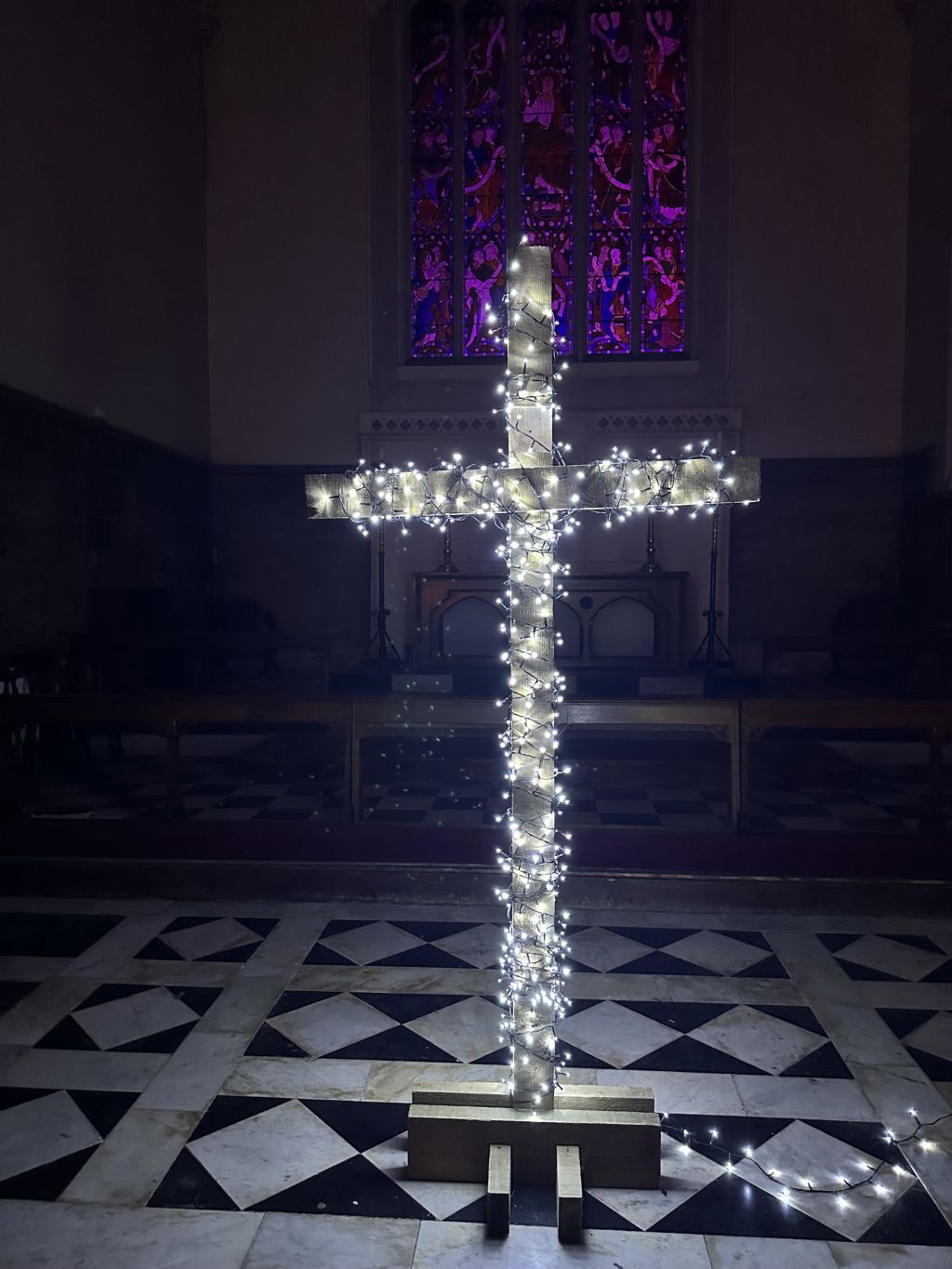
Many of our churches hosted ‘light parties’ at the end of October as a popular alternative to Halloween. Some of our renewal churches hosted the biggest celebrations.
Our diocese has been awarded £3.6 million to continue to support churches as part of phase two of our programme to ensure our churches are healthy and sustainable for the future.
Kelly Gordon is a member of Wordsley Parish in Greater Dudley Deanery. She has recently been selected as one of only three people in the UK to be part of the Leaders Europe programme within the Obama Foundation.
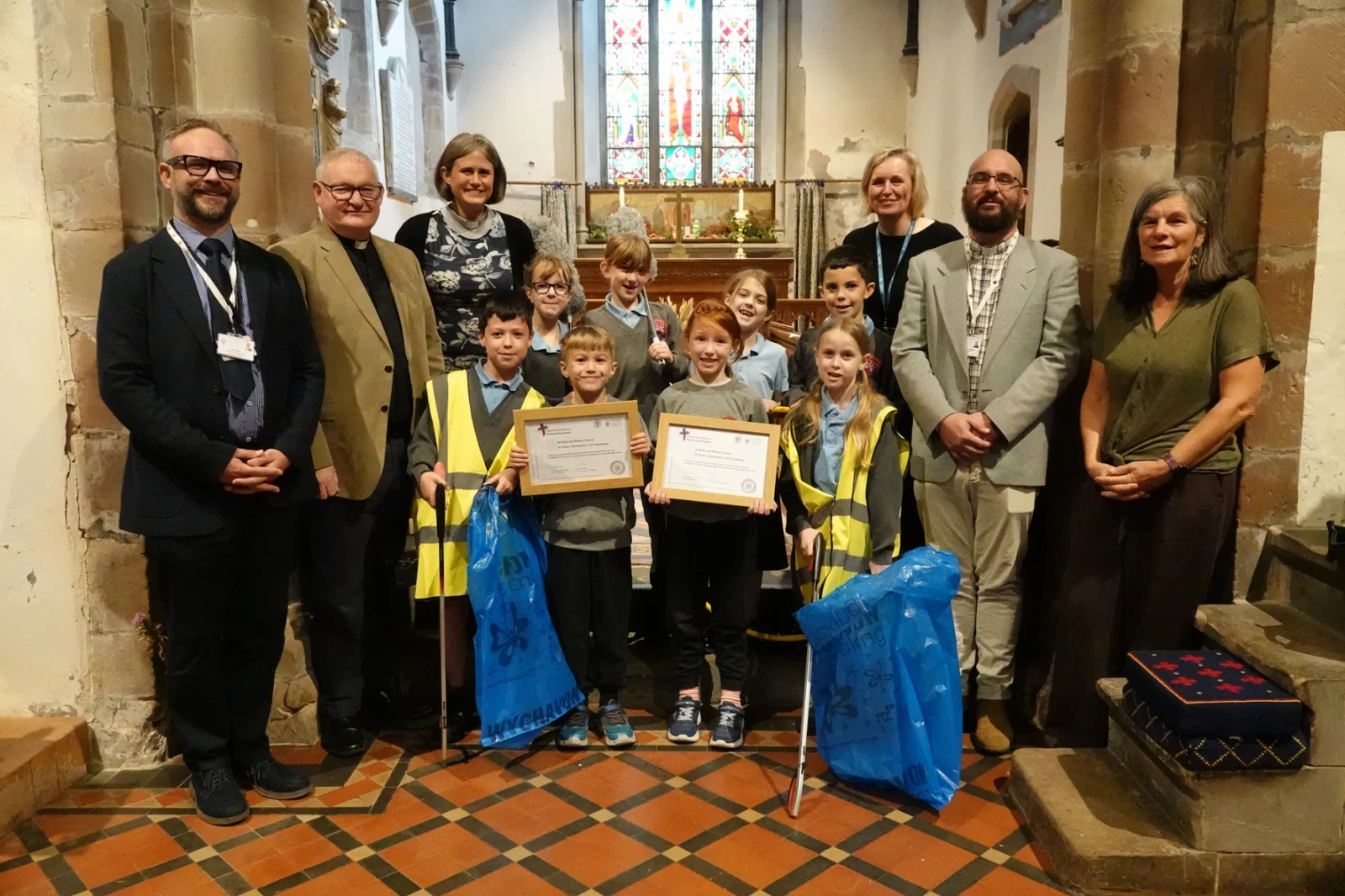
St Peter’s CE Academy and St Peter’s Church in the Saltway Team have been awarded a silver Church and School Partnership Award recognising the close relationship between the church, school and local community.
This year’s Church of England Advent and Christmas theme focuses on the first and greatest Christmas gift of all: the gift of God being born as one of us in Jesus Christ.
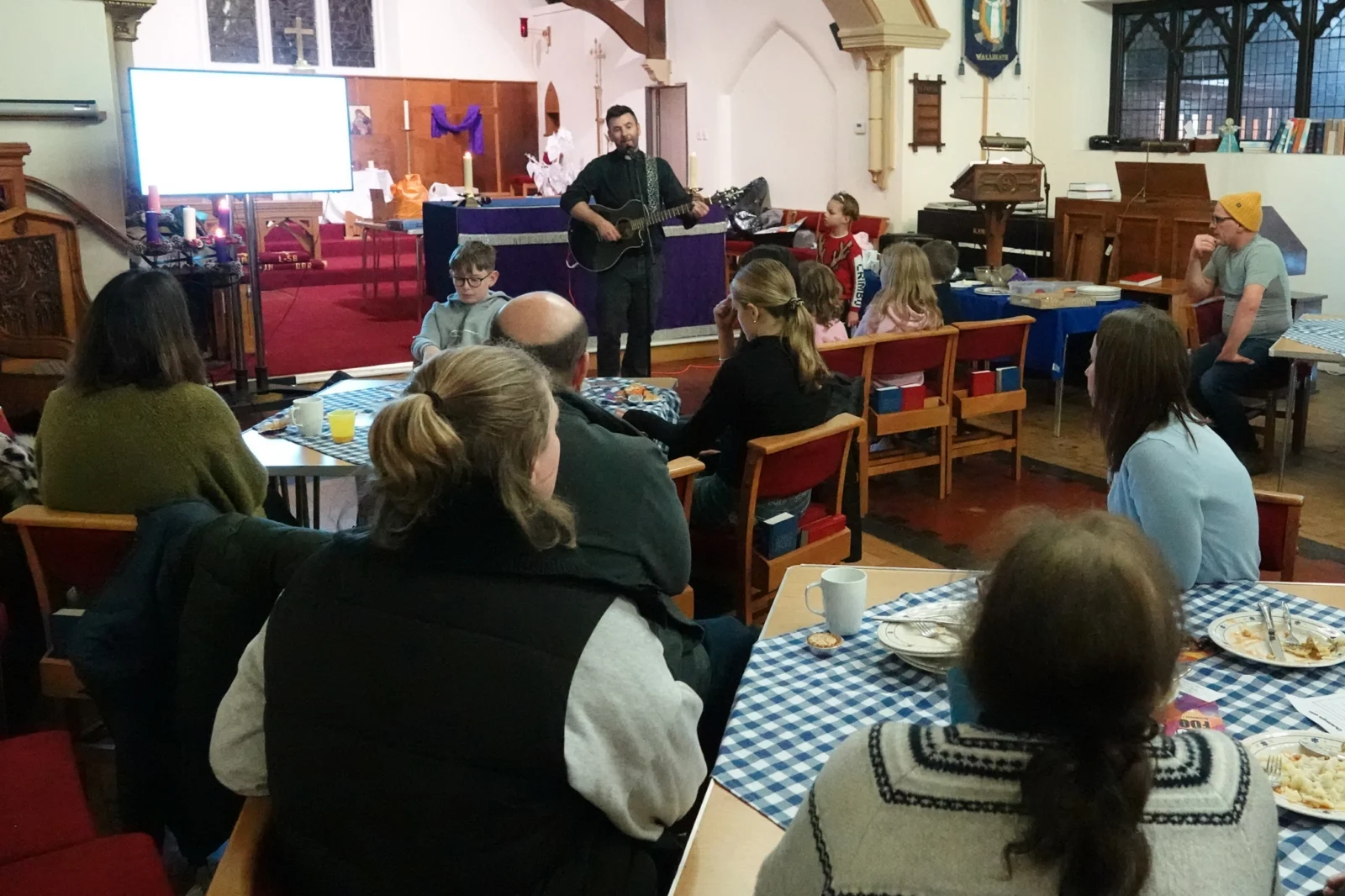
A new singing group for children will launch at St Peter’s Centre at Pedmore Church on 15 November, 10 years after Singing Angels originally began at St Andrew’s Church on the Straits.
Bishop Hugh visited Cropthorne with Charlton C of E First School on 3 November to share in their collective worship and meet with the children.
Manage Consent
To provide the best experiences, we use technologies like cookies to store and/or access device information. Consenting to these technologies will allow us to process data such as browsing behavior or unique IDs on this site. Not consenting or withdrawing consent, may adversely affect certain features and functions.
Functional
Always active
The technical storage or access is strictly necessary for the legitimate purpose of enabling the use of a specific service explicitly requested by the subscriber or user, or for the sole purpose of carrying out the transmission of a communication over an electronic communications network.
Preferences
The technical storage or access is necessary for the legitimate purpose of storing preferences that are not requested by the subscriber or user.
Statistics
The technical storage or access that is used exclusively for statistical purposes.The technical storage or access that is used exclusively for anonymous statistical purposes. Without a subpoena, voluntary compliance on the part of your Internet Service Provider, or additional records from a third party, information stored or retrieved for this purpose alone cannot usually be used to identify you.
Marketing
The technical storage or access is required to create user profiles to send advertising, or to track the user on a website or across several websites for similar marketing purposes.



 Betweeninjustice recognised by all, but requiring legislation to correct it beyond ourcapability. We see the injustice: others need to legislate.